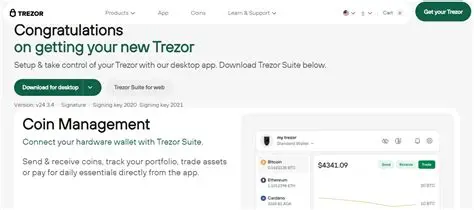
Trezor Login – The Key to Secure Crypto Management
1. Understanding Trezor Login
Trezor Login is the process that allows users to access their Trezor hardware wallet through the Trezor Suite or other supported interfaces. Unlike traditional online logins, it does not rely on a username or password stored on a server. Instead, authentication relies on your physical device, a personal PIN, and optionally a passphrase.
This method ensures that private keys never leave the device, providing unmatched security for cryptocurrency holders.
2. The Role of Trezor Login in Security
The login process is more than just access—it is a security checkpoint. Trezor Login ensures that:
Only the authorized user can access the wallet
Private keys remain completely offline
Transactions are verified and signed directly on the hardware device
Optional passphrases allow access to hidden wallets for added privacy
By logging in properly, users prevent unauthorized access and maintain full control over their assets.
3. How Trezor Login Works
Trezor Login combines hardware verification with software authentication:
Connect Your Device – Plug your Trezor wallet into a computer or mobile device.
Enter Your PIN – A unique PIN code is entered on the device to unlock it. Randomized layouts prevent keylogging attacks.
Optional Passphrase – Users can enter a passphrase to access hidden wallets.
Access Wallet Interface – Once verified, the Trezor Suite or compatible software provides access to balances, transaction history, and account management.
All sensitive operations, including signing transactions, occur on-device, keeping your assets safe.
4. Step-by-Step Trezor Login Guide
Step 1: Connecting the Device
Use the USB cable to connect your Trezor wallet.
Ensure it powers on and shows the home or PIN screen.
Step 2: Launch Trezor Suite
Open the desktop or mobile Trezor Suite application.
Wait for the software to detect your connected device.
Step 3: Enter Your PIN
Enter your personal PIN directly on the device.
Randomized number positions prevent keylogging.
Step 4: Enter Passphrase (Optional)
If you have a passphrase-enabled hidden wallet, enter it now.
This unlocks any hidden or extra wallets associated with your Trezor.
Step 5: Access Your Wallet
Once verified, your dashboard appears.
You can now view balances, send/receive cryptocurrency, and manage multiple accounts securely.
5. Security Features During Login
Hardware-Level Protection
Private keys are stored solely on the Trezor device, preventing malware from accessing sensitive information.
Physical Transaction Verification
Every transaction must be confirmed on the device itself, ensuring accuracy and legitimacy.
Encrypted Communication
Data transmitted between the Trezor Suite and the wallet is encrypted, protecting against interception.
Hidden Wallets
Passphrases allow multiple hidden wallets, separating funds and enhancing privacy.
6. Privacy Considerations
Trezor Login protects user privacy by:
Keeping private keys offline
Storing transaction history locally
Offering optional Tor network integration for added anonymity
Avoiding any cloud storage of sensitive information
This ensures that all critical data remains under user control.
7. Common Login Issues and Solutions
Device Not Detected: Ensure the USB cable is secure and the device is powered.
Incorrect PIN: Verify your PIN; repeated wrong entries trigger a device reset.
Passphrase Errors: Double-check for exact spelling and capitalization.
Software Detection Problems: Update Trezor Suite or restart your computer.
Following these steps usually resolves login problems while maintaining security.
8. Advantages of Trezor Login Over Traditional Wallet Logins
FeatureTrezor LoginOnline Wallet LoginKey StorageHardware offlineOnline serversTransaction VerificationOn-deviceSoftware onlySecurityVery highModeratePrivacyStrongLimitedRecoverySeed phraseEmail or password
Trezor Login provides higher security, privacy, and control than standard online wallets.
9. Best Practices for Secure Login
Use trusted, private devices for access
Never share your PIN or passphrase
Keep recovery seeds offline and secure
Avoid public networks and shared computers
Regularly update Trezor Suite
Adhering to these practices ensures that your login remains safe against cyber threats.
10. Use Cases for Trezor Login
Daily Portfolio Management: Access balances and track transactions safely
Sending and Receiving Crypto: Conduct transactions with on-device verification
Hidden Wallet Management: Securely separate funds with passphrase-protected wallets
Recovery Operations: Restore wallets securely using the recovery seed
Trezor Login is designed for both newcomers and advanced users seeking secure self-custody.
11. Long-Term Benefits
Complete ownership of private keys
Protection against phishing, malware, and hacking
Multiple wallet management with hidden wallet capabilities
Peace of mind knowing assets are offline and secure
Proper login practices ensure your Trezor wallet remains a reliable tool for years to come.
12. Conclusion
Trezor Login is a hardware-based authentication process that provides safe, secure access to cryptocurrency wallets. By combining the device, PIN, and optional passphrases, it allows users to manage their assets confidently and privately.
Key Takeaways:
Private keys remain offline at all times
Transactions require physical device approval
Optional passphrases add an extra layer of privacy
Following best practices ensures security
Trezor Login is the first and most important step in secure cryptocurrency management.